Consider the tale of two $20bn-something companies — both of them private equity buyouts.
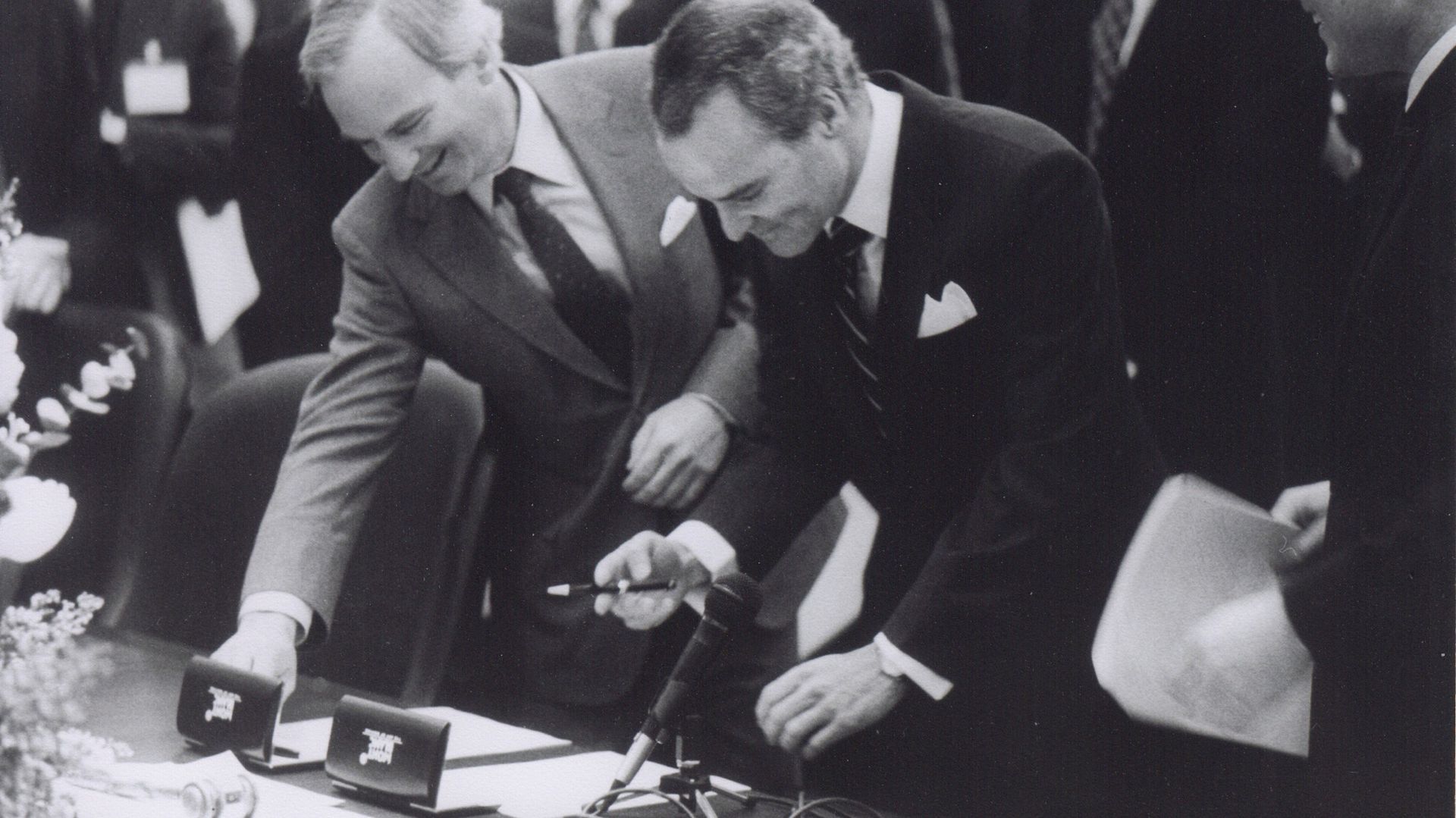
Thirty-five years ago, when Kohlberg Kravis Roberts pounced on the food-to-tobacco conglomerate, RJR Nabisco, the private equity industry hit mainstream headlines for probably the first time. The scale of that $25bn Nabisco deal — immortalised in the bestselling business book Barbarians at the Gate — is still totemic. (It dwarfs last year’s biggest global buyout — the $14bn paid for Toshiba by Japan Industrial Partners).
But in most other respects, private equity has been transformed over the past three decades. In 1989, it was still essentially a cottage industry — aggregate annual deal volumes from the 1980s until the end of the century rarely topped 1 per cent of GDP, even in the US, according to the OECD. Over the past four years, that ratio has ranged between 2 and 5 per cent, PitchBook data suggests. The intervening period witnessed vast leverage-fuelled expansion underpinned by an unprecedented era of ultra-low interest rates.
Few deals were more aggressive than KKR-Nabisco. But the most famous buyout in history soon became the most infamous. Over a 15-year period, as tobacco risks mounted and debt costs ballooned, the original deal rationale broke down. Ultimately KKR lost $730mn on the transaction.
Plenty of other companies have been ransacked over the years, often highly successfully for their private equity owners. But the industry today cannot be caricatured homogeneously as short-termist, debt-addicted asset-strippers.
Take the case of Visma, another $20bn company owned by private equity. First taken private by London-based HG, with an enterprise value of about $500mn in 2006, the Nordic software business is now reckoned to be worth 40 times that — and is still majority owned by HG. The 18-year recent history of Visma’s ownership is also, in exaggerated form, the story of private equity’s broader evolution — and in multiple ways.
One trend it reflects is longer hold times. In the 1990s or 2000s, a typical private equity firm would have been in and out of a deal in three or four years. Last year, the median hold time for the 1,121 companies that were sold was 6.4 years, an all-time record, according to PitchBook. This is due in part to a maturing model that goes beyond adding debt and cutting jobs. But it is also driven by private equity’s use and abuse of so-called continuation funds to extend investment horizons — either because they want to hold on to thriving portfolio companies for longer, or because they don’t want to crystallise weak valuations of underperformers.
Selling these days is tricky — particularly into public markets that are no longer receptive to listings of highly leveraged companies with inflated private valuations. Even in the voguish technology sector, the few examples of initial public offerings by private equity-owned companies have been cautionary. (Instacart in the US is down 25 per cent since last year’s float, and Deezer in Europe is down nearly 60 per cent.) Private equity exits via IPOs, once the norm, accounted for barely 1 per cent of exits in the US and Europe last year, the PitchBook data shows.
A second trend that HG’s ownership of Visma illustrates is the shift towards multiple investors. Collaboration between private equity firms has been an on-and-off feature of the sector for decades, notably via so-called club-deals when firms pool resources in an effort to take ever bigger targets private.
But a new style of joint investment has also been growing, exemplified most obviously by HG. In the case of Visma, the firm has brought in a new roster of investors every three or four years — either fellow private equity firms, or their end-investor “limited partners” directly. The Norwegian group now has more than 30 investors. PitchBook data shows that deals over the past four years, involving six or more investors, have multiplied 162 per cent compared with the prior four-year period, while standard single-investor deal volumes are up only 28 per cent.
Of course every investor needs an exit at some point. Recognising that short-term IPOs might not be realistic, stock exchanges from Nasdaq to the London Stock Exchange are innovating with platforms that will make it easier for investors in private companies to auction their holdings. The LSE’s “intermittent trading venue”, which is already wooing the likes of HG and Visma, may be one forward-thinking way to begin offsetting the string of delistings it has suffered of late.
patrick.jenkins@ft.com